Introduction
In the modern real estate industry, speed and efficiency play a critical role in converting inquiries into successful property deals. Real estate businesses receive leads from multiple channels such as Facebook Ads, websites, property portals, and social media platforms. Managing these leads manually often results in delayed responses, missed opportunities, and inefficient follow-up processes.
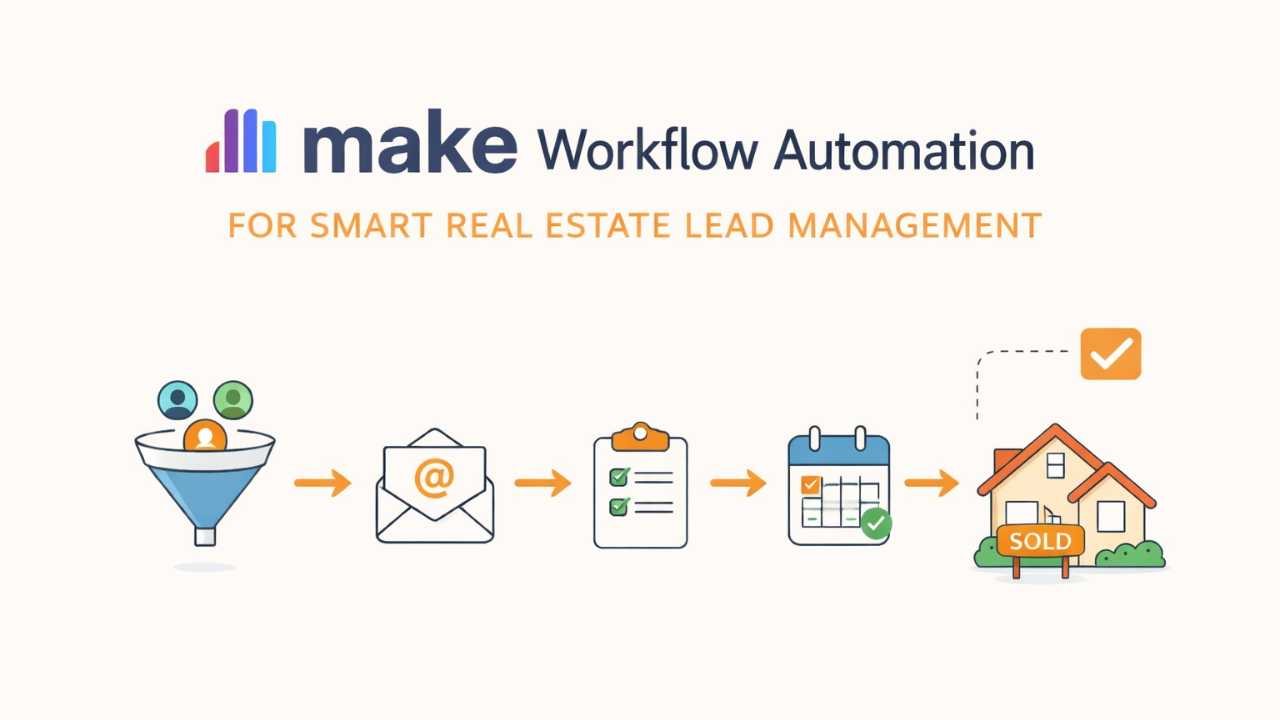
This is where Make Automation becomes a powerful solution. By using Make workflow automation, businesses can connect multiple tools, automate repetitive tasks, and streamline their entire lead management system. In this project, we built a fully automated Real Estate Lead Management System using Make.com, integrating platforms such as Facebook Ads, HubSpot CRM, Google Sheets, WhatsApp, and Calendly.
This automation system was designed and implemented by Hike Branding to help real estate businesses simplify operations, improve response time, and increase lead conversion rates.
The Challenge in Real Estate Lead Management
Real estate companies often face several operational challenges when managing leads:
- Leads coming from multiple sources
- Slow response time to new inquiries
- Manual data entry into CRM systems
- Missed follow-ups with potential buyers
- Difficulty tracking the sales pipeline
When agents manage these tasks manually, it not only consumes valuable time but also increases the risk of losing potential clients to competitors who respond faster.
With the help of Make automations, these challenges can be solved through intelligent workflow automation.
The Automation Solution Using Make
To address these challenges, we developed a complete Make automation workflow that automates the entire lead management process from inquiry to deal tracking.
The automation system integrates several tools:
- Facebook Lead Ads
- Google Sheets
- HubSpot CRM
- WhatsApp Business
- Calendly
Through powerful Make integration, these platforms communicate seamlessly to create an efficient lead management ecosystem.
Step 1: Automated Lead Capture
The automation begins when a potential buyer submits their details through a Facebook Lead Ad.
Using Make workflow automation, the system automatically captures the lead information, including:
- Name
- Phone number
- Property interest
- Budget
The lead details are then stored in Google Sheets for easy tracking and reporting. At the same time, a new contact is created inside HubSpot CRM, ensuring that the sales team has immediate access to the lead information.
This eliminates manual data entry and ensures that every lead is recorded instantly.
Step 2: Instant Customer Response via WhatsApp
Speed is critical in real estate sales. Research shows that leads contacted within the first few minutes are far more likely to convert.
Through Make automations, the system automatically sends an instant WhatsApp message to the prospect as soon as their inquiry is received.
The message acknowledges the inquiry and provides a Calendly link so the prospect can schedule a property visit at their convenience.
This immediate response improves customer experience and builds trust with potential buyers.
Step 3: Automated Property Visit Scheduling
When the prospect clicks the Calendly link and books a property visit, the automation continues to work in the background.
Using Make integration, the system:
- Updates the lead status in HubSpot CRM
- Records the visit date in Google Sheets
- Sends a confirmation message to the customer
- Notifies the real estate agent about the scheduled visit
This ensures that the sales team stays organized and prepared for every appointment.
Step 4: Automated Follow-Up System
One of the most important parts of real estate sales is consistent follow-up. However, agents often forget to follow up with leads due to busy schedules.
With Make workflow automation, the system automatically checks whether a lead has scheduled a visit or not.
If the prospect has not booked a visit within a specific time frame, the system sends automated follow-up messages reminding them to schedule a property visit.
These automated follow-ups significantly increase the chances of converting leads into clients.
Step 5: Document Collection Automation
Once a buyer shows serious interest in a property, certain documents are required to proceed with the booking process.
Through Make automations, the system automatically sends the buyer a request to upload documents.
The uploaded documents are automatically stored in a structured folder in Google Drive, making it easy for agents to access them.
Step 6: Deal Pipeline Tracking
Managing deals and monitoring sales progress is another important aspect of real estate operations.
Using Make integration, the system automatically updates the deal stages inside HubSpot CRM.
Typical deal stages include:
- New Lead
- Contacted
- Visit Scheduled
- Negotiation
- Booking
- Closed Deal
This gives real estate managers complete visibility into the sales pipeline and helps them track team performance.
Benefits of Using Make Automation for Real Estate
Implementing Make automation provides several advantages for real estate businesses:
Faster Lead Response
Prospects receive instant responses, increasing the chances of conversion.
Reduced Manual Work
Repetitive tasks like data entry and follow-ups are handled automatically.
Improved Lead Tracking
Every lead is recorded and tracked inside the CRM system.
Better Customer Experience
Clients can easily schedule visits and communicate with agents.
Higher Conversion Rates
Automated follow-ups ensure that potential buyers remain engaged.
How Hike Branding Helped Build This Automation
This automation project was designed and implemented by Hike Branding, a company focused on building smart digital automation systems for businesses.
Hike Branding played a key role in:
- Automation strategy planning
- Workflow architecture design
- CRM and platform integration
- Process optimization using Make automation
By leveraging the power of Make workflow automation, Hike Branding created a scalable solution that allows real estate businesses to manage leads efficiently and improve overall productivity.
Conclusion
Automation is becoming essential for modern real estate businesses that want to stay competitive and provide better customer experiences.
By implementing Make automations, companies can automate lead capture, communication, scheduling, follow-ups, and sales tracking. This not only reduces operational workload but also improves response time and increases the chances of closing deals.
With intelligent workflow design and powerful Make integration, businesses can transform their sales processes and build a more efficient and scalable real estate operation.
Solutions like the one implemented by Hike Branding demonstrate how automation can significantly improve lead management and help real estate businesses grow faster in today’s digital marketplace.
FAQ